Design for water first
In the tropics, rain reaches buildings horizontally, moisture moves through assemblies and shaded surfaces dry slowly. Generous overhangs, raised thresholds, drainage falls and ventilated cavities protect more than any surface coating alone.
A durable material palette begins with architecture that keeps water moving and allows components to dry.
Timber needs selection and protection
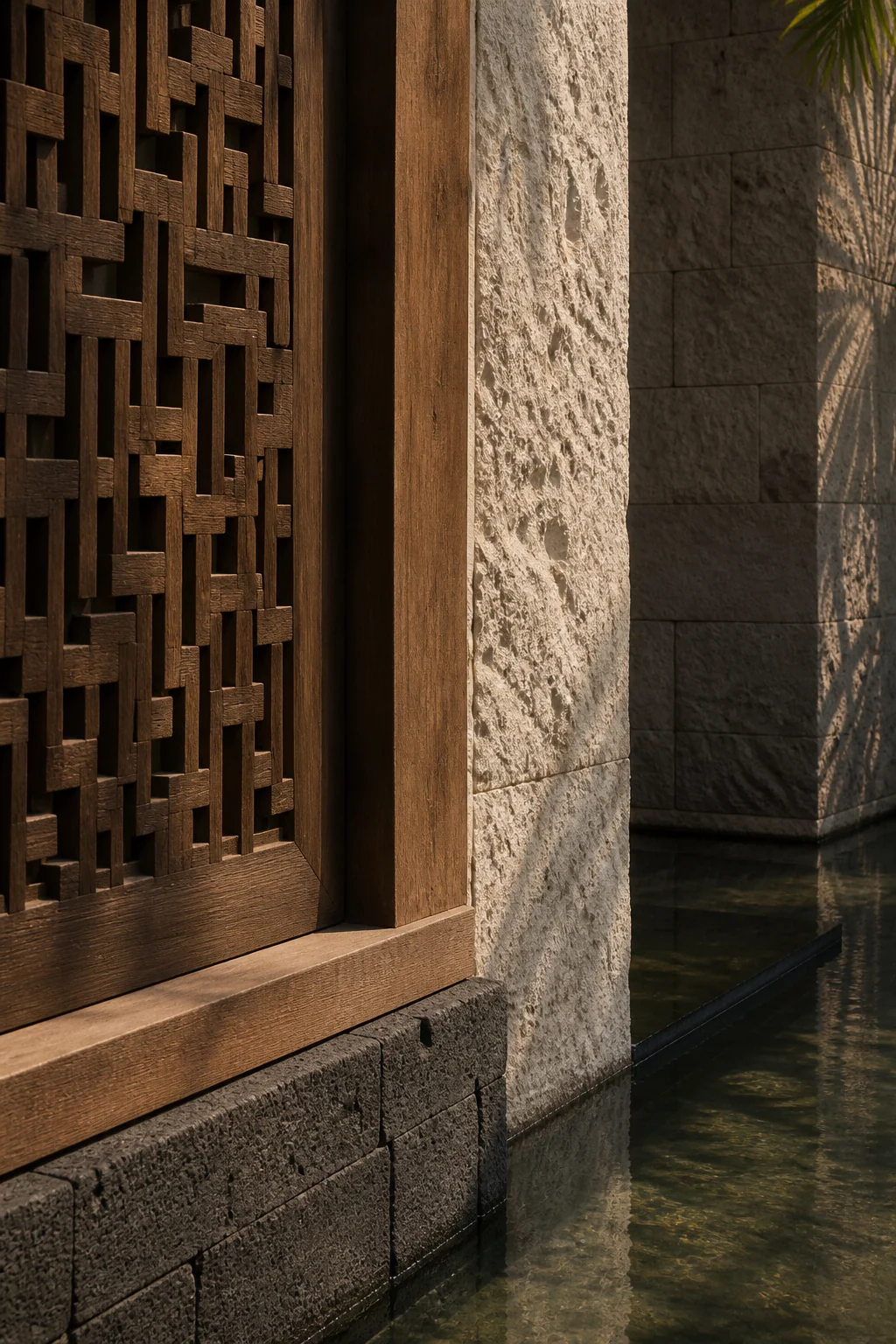
Teak and other suitable hardwoods can perform beautifully, but species, grade, seasoning and exposure all matter. Exterior timber should be detailed to shed water, avoid trapped moisture and permit maintenance.
Reclaimed or certified sources can reduce environmental impact while bringing depth and patina to new work.
Stone is durable, not maintenance-free
Volcanic stone, limestone and other natural stones vary in porosity and staining. Finish, sealant strategy, substrate movement and the chemistry of pool water all affect performance.
Samples should be tested in the actual exposure conditions, especially around pools, kitchens and shaded wet zones.
Mineral finishes can breathe
Lime and mineral-based plasters create soft, changing surfaces and can manage vapour differently from impermeable coatings. Their success depends on compatible substrates and skilled application.
Small variations are part of their character; clients should understand the intended patina before installation.
Build a maintenance language
Luxury in a tropical villa includes access for cleaning, replaceable screens, serviceable lighting and realistic finish schedules. A material is only appropriate when the owner can care for it.
The best specification aligns appearance, environmental exposure, local workmanship and long-term maintenance.